Ruby bounce
Cherry · bright acidFirm first bite, elastic centre, glass-clear finish.
Confectionery fieldwork · Canada
Sugar Spectrum is a non-gaming editorial laboratory about gummy texture, sugar crystallization, flavour design, candy architecture, and the joyful visual language of sweets.
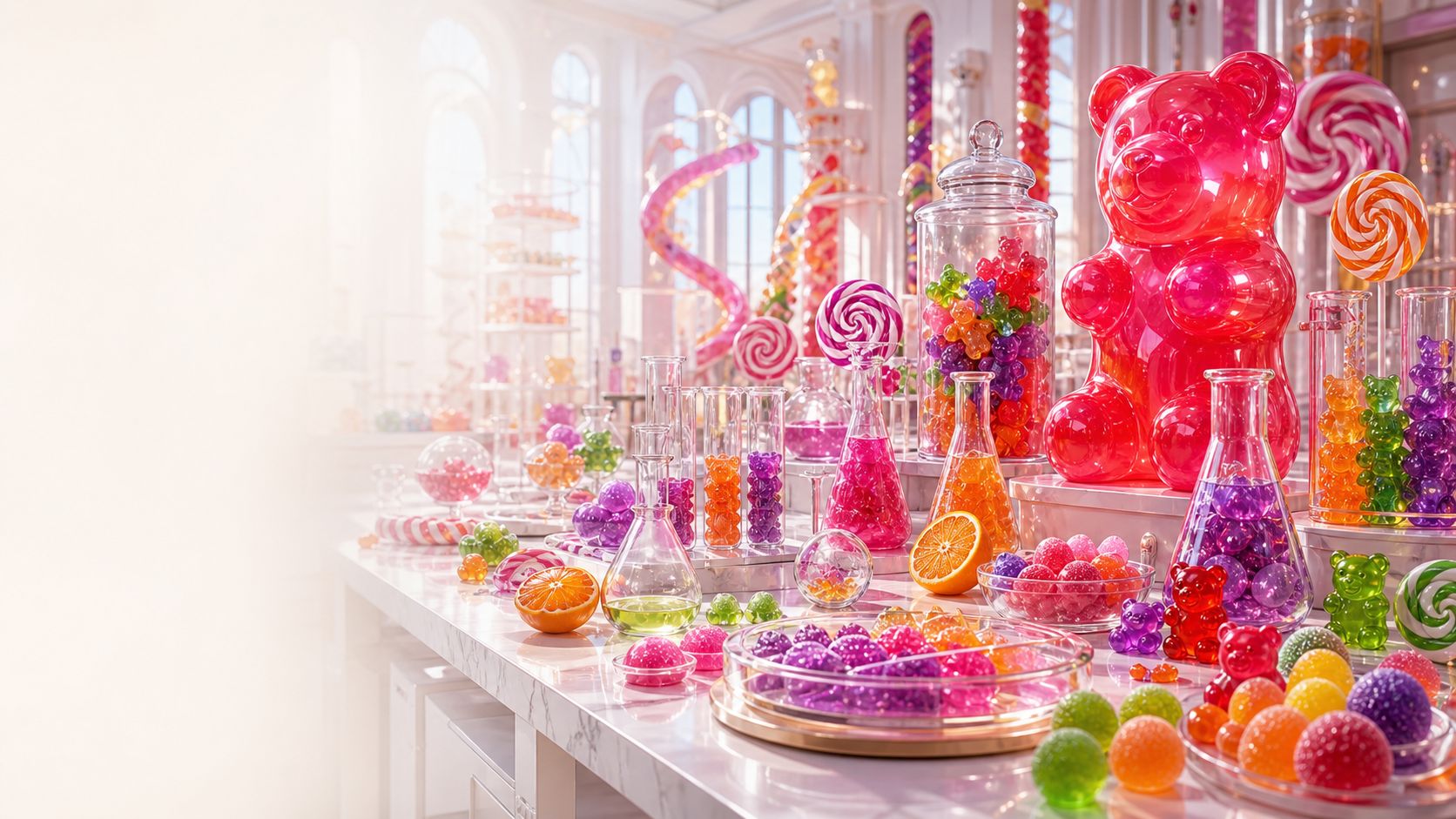
The sample bench
Before flavour, the eye reads light. Before sweetness, the hand reads resistance. We study confectionery as a designed sequence of expectations: colour, surface, aroma, first bite, chew, melt, and finish.
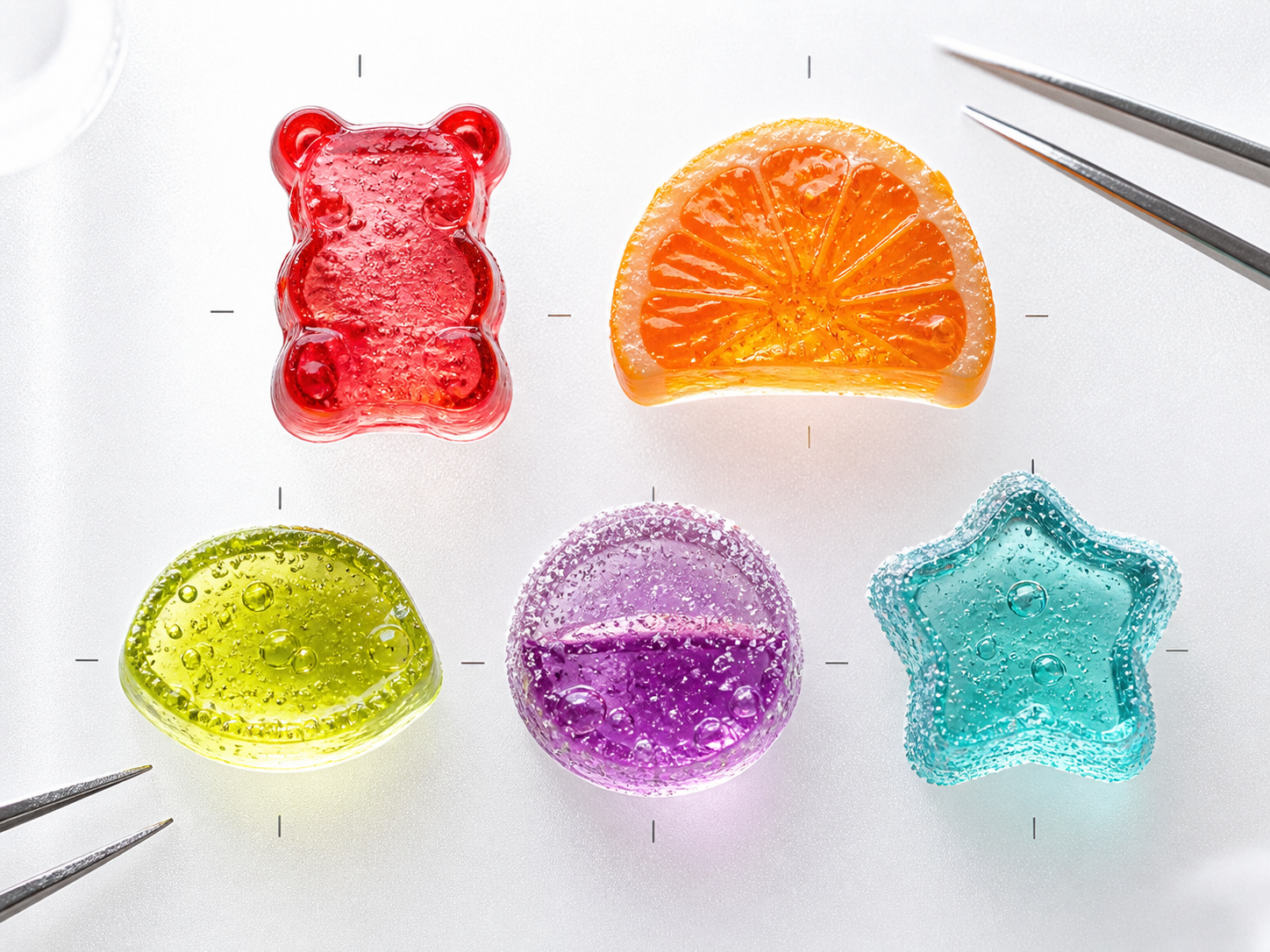 Backlit texture plate · original studio image
Firm first bite, elastic centre, glass-clear finish.
Soft gel with a clean wedge profile and a lightly sugared edge.
Springy, translucent, and designed to hold tiny bubbles.
A layered dome with two densities and a slow, soft release.
Crystalline edge, cool aroma, and a short chew.
Spectrum room
Colour does not contain flavour, but it changes what the taster predicts. A mismatch can surprise, delight, or confuse—making colour one of the confectioner’s strongest storytelling tools.
Record clarity, colour distribution, shape, coating, and visible air.
Notice tack, surface grain, flexibility, rebound, and temperature.
Cut or pull the sample to reveal density, layers, and internal bubbles.
Follow aroma, acidity, sweetness, flavour peaks, and the final note.
Write the strongest sensory image before comparing samples.
Texture matrix
A gummy can be tender yet slow, firm yet brittle, or elastic without being sticky. Texture comes from formulation, moisture, temperature, resting time, coating, and geometry.
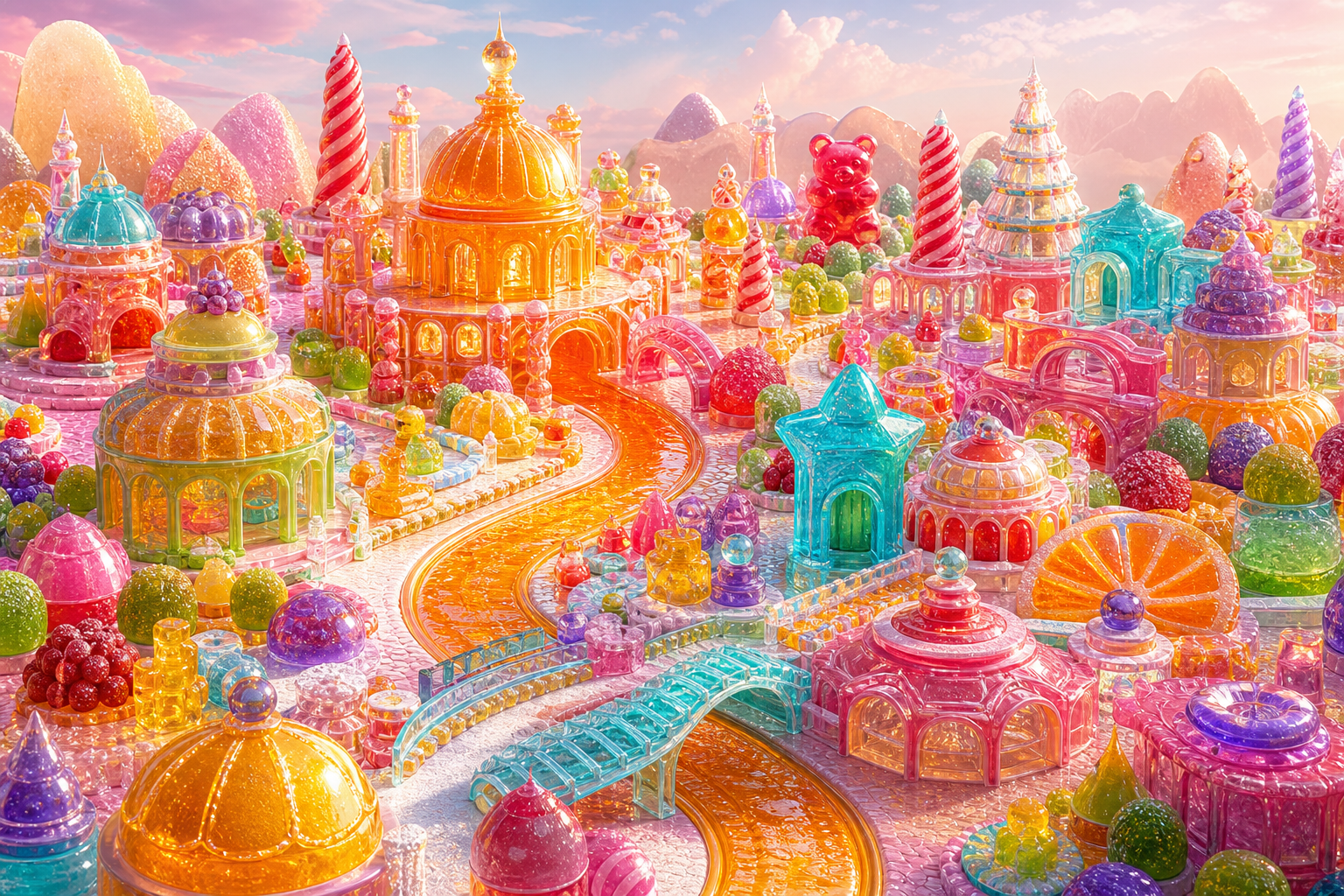
Open lab day · imaginary tour
Our fictional model turns candy properties into neighbourhoods: clear jelly becomes glass architecture, striped hard candy becomes towers, aerated sweets make soft hills, and caramel forms the slow river connecting every district.
Tour five districts →Confectionery architecture
Translucent walls hold coloured light and flex instead of cracking.
Clear domes magnify the sky but demand careful temperature control.
Soft volumes absorb sound and invite slow movement.
A flowing material becomes structural only after cooling.
Faceted forms grow through patience, concentration, and stillness.
Acid, crystal size, and rapid dissolution create an intense opening before the gummy centre has begun to release flavour.
Air can make a transparent sweet look lively, but too much interrupts colour and changes the bite.
Familiar shapes reduce uncertainty. The taster already knows where to hold, bite, and expect resistance.
Long read
Transparent candy lets the viewer inspect the object before tasting it. Light travels through colour, reveals bubbles, and turns a small sweet into a miniature lens. That visual access makes the material feel both familiar and slightly magical.
But clarity is demanding. Cloudiness, crystallization, trapped air, and uneven colour become visible immediately. The same quality that creates wonder also exposes process.
For designers, transparency is therefore not decoration. It is a promise that the interior matters—and an invitation to make texture legible.
Keep a tasting notebook
Record colour, shape, aroma, texture, flavour movement, and the memory it leaves. No rankings are required; careful description is the whole experiment.
Send a field note